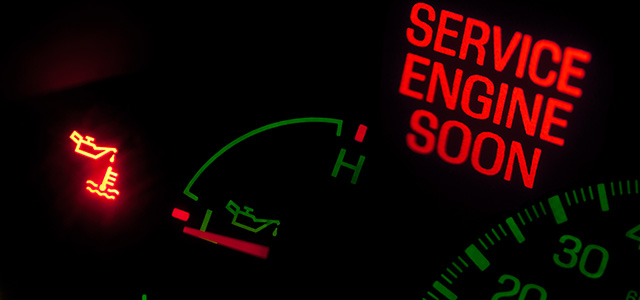
 Cars today have a wide range of sensors that monitor your cars performance and constantly check for problems. When a problem is detected you are alerted by an illuminated dashboard warning light. When you start your car most of these indicator lights should light up and then go out after several seconds. If one or more of them do not go out or they come on while driving then you have a problem that needs attention.
The Following Warning Lights Are Common In Most Cars
[toggle_box]
[toggle_item title=”ABS LIGHT” active=”false”]
This light comes on and stays on when there is something wrong with the Anti-Lock Brake System. The ABS system helps to keep your brakes from locking up and causing you to skid out of control during an emergency or short stop braking. If the light is on it means that the ABS system will not function properly, however you do still have the ability to brake. We recommend to have it looked at by an auto repair shop as soon as possible, but in the meantime the vehicle can be driven at the owner’s risk.
[/toggle_item]
[toggle_item title=”SRS LIGHT” active=”false”]
The Supplemental Restraint System is your airbag system. Because the SRS system is a safety system, it is well monitored with numerous sensors and automatic self-tests. The slightest malfunction in the system will turn on the SRS light and disable the system. This means, in the event of an accident, you do not have airbags. The car is OK to drive but we do recommend to have it looked at because it is an important safety item.
[/toggle_item]
[toggle_item title=”CHECK ENGINE LIGHT” active=”false”]
When this light comes on it usually means that there is a problem with the Engine Management System or the Emissions Control System. With the light illuminated, the vehicle is still safe to drive as long as no other faults are apparent with the engine, meaning the car is driving normally. Have the vehicle checked at an auto repair as soon as possible to avoid any damage being caused to the catalytic converter. If the light is blinking then stop the car as soon as it’s safe to do so and call a tow truck. Not having this light checked for an extended period of time can result in additional repairs.
[/toggle_item]
[toggle_item title=”LOW COOLANT LIGHT” active=”false”]
This light will come on if the coolant level drops below the coolant level sensor. If this light is on, there are two primary possibile causes. The most common one is a coolant leak and the other is a malfunctioning level sensor. If there are no visible leaks, the vehicle isn’t overheating or running hot and there is still coolant in the reservoir, it can be driven at your own risk. If you can see coolant leaking on the ground or if your unsure then we recommend having it towed to an auto repair shop right away.
[/toggle_item]
[toggle_item title=”OIL PRESSURE LIGHT” active=”false”]
Do not ignore this light . It comes on when your engine is not getting normal oil pressure. Stop driving the car and check the oil level. Add oil if it’s low and then check to see if the light stays on. If it doesn’t go out we recommend bringing the car to an auto repair shop for diagnosis. If the engine has no oil in it then have the car towed. Some of the more common causes are burning or leaking oil and some other possibilities could be a worn oil pump or faulty oil pressure sending unit. Driving a car with very little or no oil in it could cost you an engine, so be cautious if this light comes on.
[/toggle_item]
[toggle_item title=”BATTERY CHARGE LIGHT” active=”false”]
This light comes on when there is a problem with the charging system. If it does come on then the alternator is no longer charging the battery. This means the car will run until the battery drains out and the engine cuts off. Unless you are very close to home or an auto repair shop, we do not recommend continuing to drive for safety reasons. Some of the more common causes could be a broken accessory belt or a faulty alternator.
[/toggle_item]
[toggle_item title=”ENGINE TEMPERATURE LIGHT” active=”false”]
If this light illuminates pull over right away. It’s telling you that the engine is overheating. Have the vehicle towed to a repair shop and do not attempt to drive any further. There are a lot of things that could cause overheating both major and minor, but it usually has something to do with a problem in the cooling system.
[/toggle_item]
[toggle_item title=”DOOR ADJAR LIGHT” active=”false”]
This light means that one or more doors are not properly shut. Check all of the doors and the trunk.
[/toggle_item]
[toggle_item title=”LOW FUEL LIGHT” active=”false”]
This light will come on when your gas tank is almost empty. We recommend filling your gas tank before it reaches a quarter tank. This will prolong the life of the fuel pump and keep the sediments from the bottom of the gas tank from getting into and clogging up the fuel lines, fuel injectors and fuel filter.
[/toggle_item]
[toggle_item title=”BRAKE LIGHT (RED)” active=”false”]
The red brake light comes on when there is a problem with the brake system and should not be ignored. If it does come on the first thing to check is your emergency brake. If it is not fully released the light will stay on. If that doesn’t turn the light off then you may have a brake fluid leak. If the brake pedal feels abnormal or spongy do not drive the vehicle. Have it towed to an auto repair shop.
[/toggle_item]
[/toggle_box]
The Following Warning Lights Are Not As Common As Above:
[toggle_box]
[toggle_item title=”LOW TIRE PRESSURE LIGHT” active=”false”]
This light comes on when the Tire Pressure Monitoring System (TPMS) detects that a tires pressure has dropped below a minimum psi.This is important because driving on a tire that is low on air can cause a tire blowout, make the vehicle handle poorly, reduce fuel mileage or leave you stranded with a flat tire. As soon as possible fill the tire back up with the proper amount of air. Consult your owners manual for the procedure to reset the TPMS light or bring the car to an auto repair shop to have it done.
[/toggle_item]
[toggle_item title=”LAMP OUT INDICATOR LIGHT” active=”false”]This light comes on if one or more lights in the vehicle are out. Some vehicles will indicate which light it is and others will not. Either way we recommend having them all checked as soon as possible. The could be a safety issue especially if your brake or headlights are out.
[/toggle_item]
[toggle_item title=”SERVICE REMINDER LIGHT” active=”false”]
This light comes on when it’s time for scheduled service. Check your owners manual for the service that is currently due. Some cars on a flex schedule , which means you should wait for the dash warnings to tell you what service is due and when to do it, and others are on a set mileage schedule, which means you can refer to your owners manual to see what service is due next. BMW owners do not confuse this with the ‘Service Engine Soon’ light, which is the ‘Check Engine Light’.
[/toggle_item]
[toggle_item title=”BRAKE PAD LIGHT (YELLOW)” active=”false”]
This light is for brake pad wear and is usually yellow. It’s letting you know that your brake pads have worn down and it’s time to have them replaced. When the light comes on you still have brakes, but we do recommend to have them looked at right away because they are a very important safety item and will need to be replaced very soon.
[/toggle_item]
[toggle_item title=”EPC LIGHT” active=”false”]
This is a Volkswagen light and it stands for Electronic Power Control. The most common cause is a faulty brake light switch, but there are other faults that could cause this light to come on. Make sure you bring the car to a repair shop that has the proper scanner to read the codes so that the problem can be properly diagnosed and the codes can be cleared.
[/toggle_item]
[toggle_item title=”ANTI-SLIP INDICATOR LIGHT” active=”false”]
If this light comes on it means that the vehicle has or may lose traction due to difficult driving conditions. It may reset itself, but if it doesn’t have an auto repair shop diagnose the problem and reset it.
[/toggle_item]
[toggle_item title=”ESP/ BAS LIGHT” active=”false”]
This light comes on to inform you of a possible problem with the Electronic Stability Program Technology. ESP is designed to improve the safety of the vehicles stability by detecting and minimizing skids. BAS stands for Brake Assist System and works with the ESP technology. Together these systems regulate engine output, use individual wheel braking and steering assist to help the vehicle regain stability when neeeded.
[/toggle_item]
[/toggle_box]
* Eurasian Service Center is not responsible for the result of any actions taken by anyone using the information stated above.
Cars today have a wide range of sensors that monitor your cars performance and constantly check for problems. When a problem is detected you are alerted by an illuminated dashboard warning light. When you start your car most of these indicator lights should light up and then go out after several seconds. If one or more of them do not go out or they come on while driving then you have a problem that needs attention.
The Following Warning Lights Are Common In Most Cars
[toggle_box]
[toggle_item title=”ABS LIGHT” active=”false”]
This light comes on and stays on when there is something wrong with the Anti-Lock Brake System. The ABS system helps to keep your brakes from locking up and causing you to skid out of control during an emergency or short stop braking. If the light is on it means that the ABS system will not function properly, however you do still have the ability to brake. We recommend to have it looked at by an auto repair shop as soon as possible, but in the meantime the vehicle can be driven at the owner’s risk.
[/toggle_item]
[toggle_item title=”SRS LIGHT” active=”false”]
The Supplemental Restraint System is your airbag system. Because the SRS system is a safety system, it is well monitored with numerous sensors and automatic self-tests. The slightest malfunction in the system will turn on the SRS light and disable the system. This means, in the event of an accident, you do not have airbags. The car is OK to drive but we do recommend to have it looked at because it is an important safety item.
[/toggle_item]
[toggle_item title=”CHECK ENGINE LIGHT” active=”false”]
When this light comes on it usually means that there is a problem with the Engine Management System or the Emissions Control System. With the light illuminated, the vehicle is still safe to drive as long as no other faults are apparent with the engine, meaning the car is driving normally. Have the vehicle checked at an auto repair as soon as possible to avoid any damage being caused to the catalytic converter. If the light is blinking then stop the car as soon as it’s safe to do so and call a tow truck. Not having this light checked for an extended period of time can result in additional repairs.
[/toggle_item]
[toggle_item title=”LOW COOLANT LIGHT” active=”false”]
This light will come on if the coolant level drops below the coolant level sensor. If this light is on, there are two primary possibile causes. The most common one is a coolant leak and the other is a malfunctioning level sensor. If there are no visible leaks, the vehicle isn’t overheating or running hot and there is still coolant in the reservoir, it can be driven at your own risk. If you can see coolant leaking on the ground or if your unsure then we recommend having it towed to an auto repair shop right away.
[/toggle_item]
[toggle_item title=”OIL PRESSURE LIGHT” active=”false”]
Do not ignore this light . It comes on when your engine is not getting normal oil pressure. Stop driving the car and check the oil level. Add oil if it’s low and then check to see if the light stays on. If it doesn’t go out we recommend bringing the car to an auto repair shop for diagnosis. If the engine has no oil in it then have the car towed. Some of the more common causes are burning or leaking oil and some other possibilities could be a worn oil pump or faulty oil pressure sending unit. Driving a car with very little or no oil in it could cost you an engine, so be cautious if this light comes on.
[/toggle_item]
[toggle_item title=”BATTERY CHARGE LIGHT” active=”false”]
This light comes on when there is a problem with the charging system. If it does come on then the alternator is no longer charging the battery. This means the car will run until the battery drains out and the engine cuts off. Unless you are very close to home or an auto repair shop, we do not recommend continuing to drive for safety reasons. Some of the more common causes could be a broken accessory belt or a faulty alternator.
[/toggle_item]
[toggle_item title=”ENGINE TEMPERATURE LIGHT” active=”false”]
If this light illuminates pull over right away. It’s telling you that the engine is overheating. Have the vehicle towed to a repair shop and do not attempt to drive any further. There are a lot of things that could cause overheating both major and minor, but it usually has something to do with a problem in the cooling system.
[/toggle_item]
[toggle_item title=”DOOR ADJAR LIGHT” active=”false”]
This light means that one or more doors are not properly shut. Check all of the doors and the trunk.
[/toggle_item]
[toggle_item title=”LOW FUEL LIGHT” active=”false”]
This light will come on when your gas tank is almost empty. We recommend filling your gas tank before it reaches a quarter tank. This will prolong the life of the fuel pump and keep the sediments from the bottom of the gas tank from getting into and clogging up the fuel lines, fuel injectors and fuel filter.
[/toggle_item]
[toggle_item title=”BRAKE LIGHT (RED)” active=”false”]
The red brake light comes on when there is a problem with the brake system and should not be ignored. If it does come on the first thing to check is your emergency brake. If it is not fully released the light will stay on. If that doesn’t turn the light off then you may have a brake fluid leak. If the brake pedal feels abnormal or spongy do not drive the vehicle. Have it towed to an auto repair shop.
[/toggle_item]
[/toggle_box]
The Following Warning Lights Are Not As Common As Above:
[toggle_box]
[toggle_item title=”LOW TIRE PRESSURE LIGHT” active=”false”]
This light comes on when the Tire Pressure Monitoring System (TPMS) detects that a tires pressure has dropped below a minimum psi.This is important because driving on a tire that is low on air can cause a tire blowout, make the vehicle handle poorly, reduce fuel mileage or leave you stranded with a flat tire. As soon as possible fill the tire back up with the proper amount of air. Consult your owners manual for the procedure to reset the TPMS light or bring the car to an auto repair shop to have it done.
[/toggle_item]
[toggle_item title=”LAMP OUT INDICATOR LIGHT” active=”false”]This light comes on if one or more lights in the vehicle are out. Some vehicles will indicate which light it is and others will not. Either way we recommend having them all checked as soon as possible. The could be a safety issue especially if your brake or headlights are out.
[/toggle_item]
[toggle_item title=”SERVICE REMINDER LIGHT” active=”false”]
This light comes on when it’s time for scheduled service. Check your owners manual for the service that is currently due. Some cars on a flex schedule , which means you should wait for the dash warnings to tell you what service is due and when to do it, and others are on a set mileage schedule, which means you can refer to your owners manual to see what service is due next. BMW owners do not confuse this with the ‘Service Engine Soon’ light, which is the ‘Check Engine Light’.
[/toggle_item]
[toggle_item title=”BRAKE PAD LIGHT (YELLOW)” active=”false”]
This light is for brake pad wear and is usually yellow. It’s letting you know that your brake pads have worn down and it’s time to have them replaced. When the light comes on you still have brakes, but we do recommend to have them looked at right away because they are a very important safety item and will need to be replaced very soon.
[/toggle_item]
[toggle_item title=”EPC LIGHT” active=”false”]
This is a Volkswagen light and it stands for Electronic Power Control. The most common cause is a faulty brake light switch, but there are other faults that could cause this light to come on. Make sure you bring the car to a repair shop that has the proper scanner to read the codes so that the problem can be properly diagnosed and the codes can be cleared.
[/toggle_item]
[toggle_item title=”ANTI-SLIP INDICATOR LIGHT” active=”false”]
If this light comes on it means that the vehicle has or may lose traction due to difficult driving conditions. It may reset itself, but if it doesn’t have an auto repair shop diagnose the problem and reset it.
[/toggle_item]
[toggle_item title=”ESP/ BAS LIGHT” active=”false”]
This light comes on to inform you of a possible problem with the Electronic Stability Program Technology. ESP is designed to improve the safety of the vehicles stability by detecting and minimizing skids. BAS stands for Brake Assist System and works with the ESP technology. Together these systems regulate engine output, use individual wheel braking and steering assist to help the vehicle regain stability when neeeded.
[/toggle_item]
[/toggle_box]
* Eurasian Service Center is not responsible for the result of any actions taken by anyone using the information stated above.
Lorem ipsum dolor sit amet, consectetur adipisicing elit,
sed do eiusmod tempor incididunt ut labore et dolore magna aliqua. Ut enim ad
minim veniam, quis nostrud exercitation ullamco laboris nisi ut aliquip ex ea
commodo consequat.
Lorem ipsum dolor sit amet, consectetur adipisicing elit,
sed do eiusmod tempor incididunt ut labore et dolore magna aliqua. Ut enim ad
minim veniam, quis nostrud exercitation ullamco laboris nisi ut aliquip ex ea
commodo consequat.
Lorem ipsum dolor sit amet, consectetur adipisicing elit,
sed do eiusmod tempor incididunt ut labore et dolore magna aliqua. Ut enim ad
minim veniam, quis nostrud exercitation ullamco laboris nisi ut aliquip ex ea
commodo consequat.